If you’ve seen the word “diatribe” pop up in texts, comments, or social media threads and wondered what it actually means, you’re not alone.
Ever been in a group chat where someone suddenly drops a long, angry rant about work, politics, or their ex and someone replies, “Wow, that was a whole diatribe”
Understanding words like diatribe meaning in chat and texting culture is important in 2026 because online conversations move fast and tone matters.
Using the wrong word (or misunderstanding it) can make you look out of touch or overly dramatic.
Let’s get into it.
What Does “Diatribe” Mean? (Definition & Origin)
📖 Definition of Diatribe
A diatribe is:
A forceful, bitter, or angry rant — usually spoken or written — that criticizes someone or something at length.
In simple terms:
- It’s not just complaining.
- It’s not just venting.
- It’s a long, emotional, often aggressive rant.
If someone says, “He went on a diatribe,” it means the person delivered an intense verbal attack or extended criticism.
🏛️ Origin of the Word “Diatribe”
The word diatribe comes from the Greek word diatribē, meaning “discourse” or “conversation.”
Interestingly, it wasn’t always negative. In ancient philosophy, it referred to serious discussions. Over time, especially in English usage, it evolved to mean an angry or bitter speech.
By the time it entered mainstream English dictionaries, including references in respected sources like the Oxford English Dictionary, the meaning had firmly shifted toward harsh criticism.
So when you use “diatribe” today, you’re usually implying strong emotion — often frustration or anger.
How Is “Diatribe” Used in Texts or Chat?
In modern internet culture (2026 edition), diatribe is often used in:
- Group chats
- Twitter/X threads
- Reddit comments
- Instagram captions
- TikTok comment sections
- Workplace Slack channels
- Discord servers
It’s typically used in one of two ways:
1️⃣ To Describe Someone’s Angry Rant
Example:
“Bro just dropped a 10-minute diatribe about pineapple on pizza.”
Translation:
He went on a long, passionate rant.
2️⃣ As a Self-Aware Joke
Example:
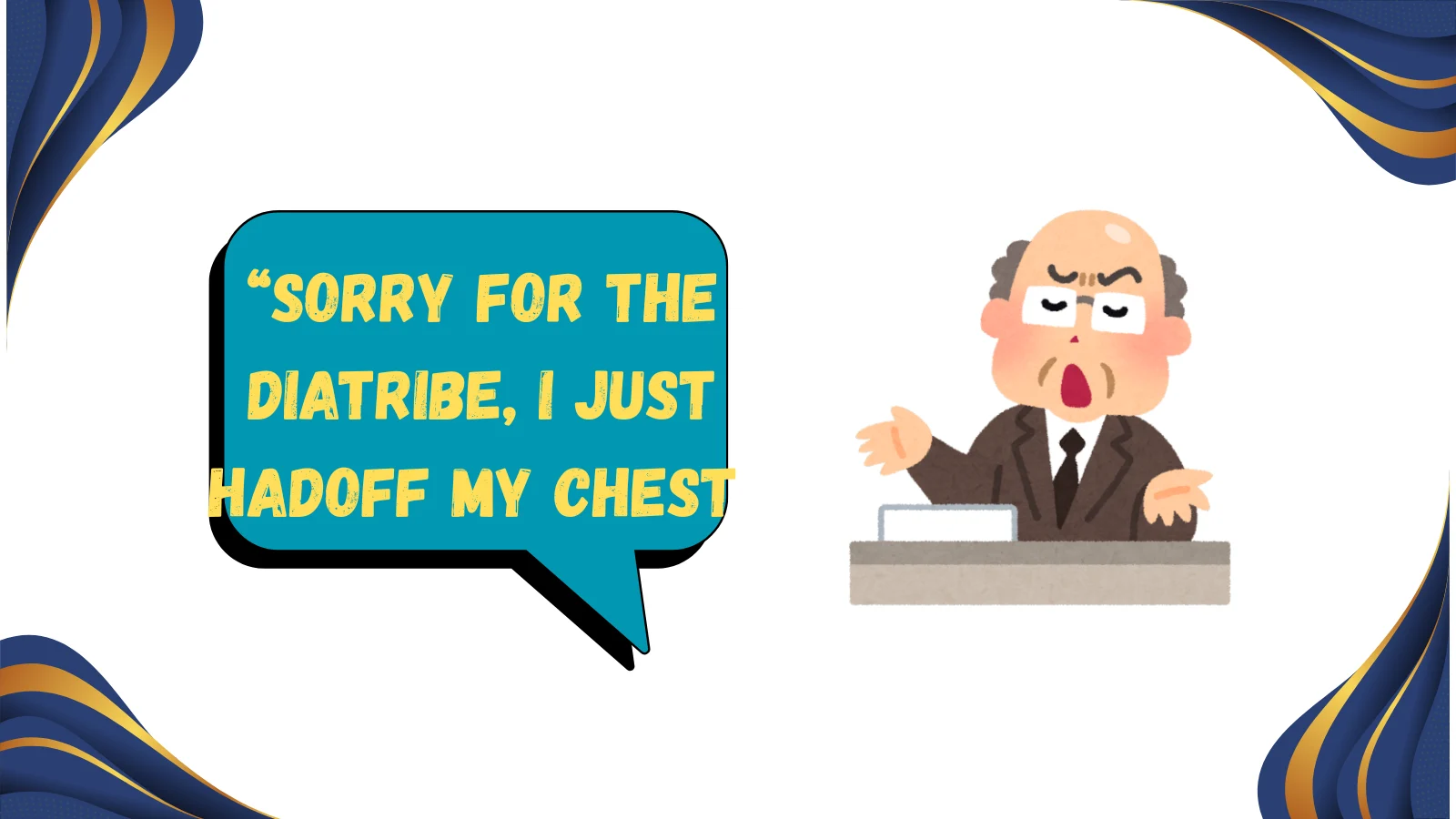
“Sorry for the diatribe, I just had to get that off my chest 😭”
Here, the person acknowledges they just wrote a long emotional message.
Tone Matters
Calling something a diatribe can sometimes sound:
- Slightly mocking
- Playfully dramatic
- Or seriously critical
So be careful. If someone is genuinely upset, labeling their feelings as a “diatribe” might seem dismissive.
Examples of “Diatribe” in Conversations
Let’s look at real-world texting scenarios.
🧑🤝🧑 Group Chat Example
Alex: I swear this new update ruined everything. Nothing works. The UI is trash. Why would they even—
Sam: Okay, that was a full diatribe 😂
Here, Sam is teasing Alex for going off on a rant.
💼 Workplace Chat Example
Manager: I don’t want this meeting turning into a diatribe about last quarter’s numbers. Let’s focus on solutions.
In professional settings, it means:
Keep criticism constructive — not emotional.
🐦 Social Media Post Example
“Not me writing a whole diatribe in the comments about how bad the finale was.”
This usage is playful and self-aware.
💔 Relationship Scenario
Taylor: Why didn’t you reply all day?
Jordan: Here comes the 3-paragraph diatribe…
This can be slightly sarcastic — implying overreaction.
When Should You Use “Diatribe” in Texting?
You can use diatribe when:
- Someone is ranting intensely.
- You’re joking about your own emotional message.
- You want to describe a long, critical speech.
- You’re summarizing an angry comment thread.
Avoid using it when:
- Someone is calmly explaining a concern.
- You want to show empathy.
- The situation is serious or sensitive.
Calling a heartfelt message a “diatribe” might minimize someone’s feelings.
Common Mistakes or Misunderstandings
❌ Mistake 1: Thinking It Just Means “Talking a Lot”
Not every long message is a diatribe.
A diatribe must include:
- Strong emotion
- Harsh criticism
- Aggressive tone
A detailed explanation ≠ a diatribe.
❌ Mistake 2: Confusing It with “Debate”
A debate is structured and balanced.
A diatribe is one-sided and emotional.
❌ Mistake 3: Using It as a Compliment
You wouldn’t usually say:
“I loved your diatribe.”
Unless you’re joking.
It has a negative or dramatic undertone.
Diatribe vs. Rant vs. Vent
Here’s a quick comparison:
| Word | Tone | Emotion Level | Length | Negative? |
|---|---|---|---|---|
| Rant | Emotional | Medium–High | Medium | Sometimes |
| Vent | Frustrated | Medium | Short–Medium | No |
| Diatribe | Angry / Bitter | High | Long | Usually Yes |
So if you want to sound more dramatic or literary, “diatribe” hits harder than “rant.”
Related Slangs or Abbreviations
If you’re learning internet slang, you might also see:
- TL;DR – Too Long; Didn’t Read
- Rant mode activated – Meme phrase
- Keyboard warrior – Someone who argues aggressively online
- Triggered – Emotionally reactive
- Unhinged – Acting wildly emotional
For example:
“That thread turned into a diatribe real quick. TL;DR: he’s mad.”
Internal linking idea: You could link to articles explaining TL;DR meaning, keyboard warrior meaning, or triggered slang meaning.
Why “Diatribe” Is Trending in 2026
In the era of:
- Viral comment sections
- Reaction videos
- Cancel culture debates
- Political threads
- TikTok storytimes
People are writing longer emotional posts again.
While short-form content dominates, emotional “paragraph dumps” are still common — especially in:
- Reddit arguments
- Instagram story rants
- Twitter/X threads
- Discord debates
Calling something a diatribe has become a slightly intellectual way to say:
“That was a dramatic rant.”
It sounds smarter than “rant,” which is why it’s popular in online discourse.
How to Use “Diatribe” Correctly (Practical Guide)
If you want to sound natural using this word, follow this formula:
✅ Correct Usage Pattern
- “He went on a diatribe about.”
- “Sorry for the diatribe.”
- “That comment turned into a diatribe.”
- “I didn’t mean to write a whole diatribe.”
❌ Avoid This
- “She diatribe me yesterday.” (Wrong grammar)
- “Nice diatribe!” (Unless sarcastic)
Remember:
It’s usually a noun, not a verb.
Real-Life Relatable Scenarios
🍕 Food Debate
Someone posts:
“Pineapple on pizza is disgusting. It ruins the texture. It’s not authentic. It’s a crime.”
Reply:
“Bro wrote a whole diatribe over pizza 😭”
📱 Tech Frustration
After a buggy app update:
“Why did they move the buttons? Nothing works. This is the worst update ever.”
Friend:
“Okay Steve Jobs, that’s enough diatribe for one day.”
💔 Relationship Drama
“You never text first. You’re always busy. I feel ignored.”
Reply:
“I hear you. Let’s talk — no need for a diatribe.”
(Though this one might escalate things 😅)
Is “Diatribe” Formal or Informal?
Good question.
It’s technically formal English, but it’s now widely used in casual contexts.
You’ll see it in:
- News articles
- Political commentary
- Academic writing
- Social media captions
- Group chats
Because it sounds slightly intellectual, some people use it to sound clever or sarcastic online.
Psychological Angle: Why We Go on Diatribes
Let’s be real.
We all have moments where emotions overflow especially online where:
- There’s no face-to-face feedback.
- We type faster than we think.
- Algorithms reward outrage.
A diatribe often happens when:
- Someone feels unheard.
- They’re frustrated repeatedly.
- They want validation.
- They’re emotionally triggered.
Understanding this helps you respond better instead of escalating conflict.
7–8 Short FAQs About “Diatribe Meaning”
1. What does diatribe mean in texting?
It means a long, angry rant criticizing someone or something.
2. Is diatribe a negative word?
Usually yes. It implies harsh, emotional criticism.
3. Can diatribe be used jokingly?
Yes. Many people use it playfully to describe their own dramatic messages.
4. Is diatribe the same as rant?
Similar, but diatribe sounds more intense and more bitter.
5. Is diatribe formal English?
Yes, but it’s commonly used in casual conversations too.
6. Can you use diatribe as a verb?
Not commonly. It’s mainly a noun.
7. Where is diatribe commonly used?
Social media, comment sections, debates, group chats, and online forums.
8. Why do people call messages diatribes?
To highlight that the message was long, emotional, and strongly critical.
Final Thoughts
Understanding the diatribe meaning helps you better interpret tone in digital conversations. It’s more than just a rant it’s a long, emotionally charged criticism that often carries frustration or anger.
In modern texting culture, the word is used both seriously and sarcastically. Knowing the difference can help you avoid misunderstandings and communicate more effectively.
Next time someone says, “That was a whole diatribe,” you’ll know exactly what they mean and whether they’re teasing or criticizing.