Ever been stuck in math class wondering what your teacher means by “congruent”?
Or maybe you saw a symbol like ≅ and thought, “What does that even mean?”
Understanding congruent meaning in math is important because it shows up everywhere from geometry problems and exam questions to real-life design, architecture, and even digital graphics.
If you’re preparing for school exams, competitive tests, or just want to improve your math basics, this guide will make everything crystal clear.
In this updated 2026 guide, we’ll break down the concept in simple language, share relatable examples, clear up common misunderstandings, and help you use the term correctly in math discussions and problem-solving.
What Does “Congruent” Mean in Math? (Definition & Origin)
Simple Definition of Congruent in Math
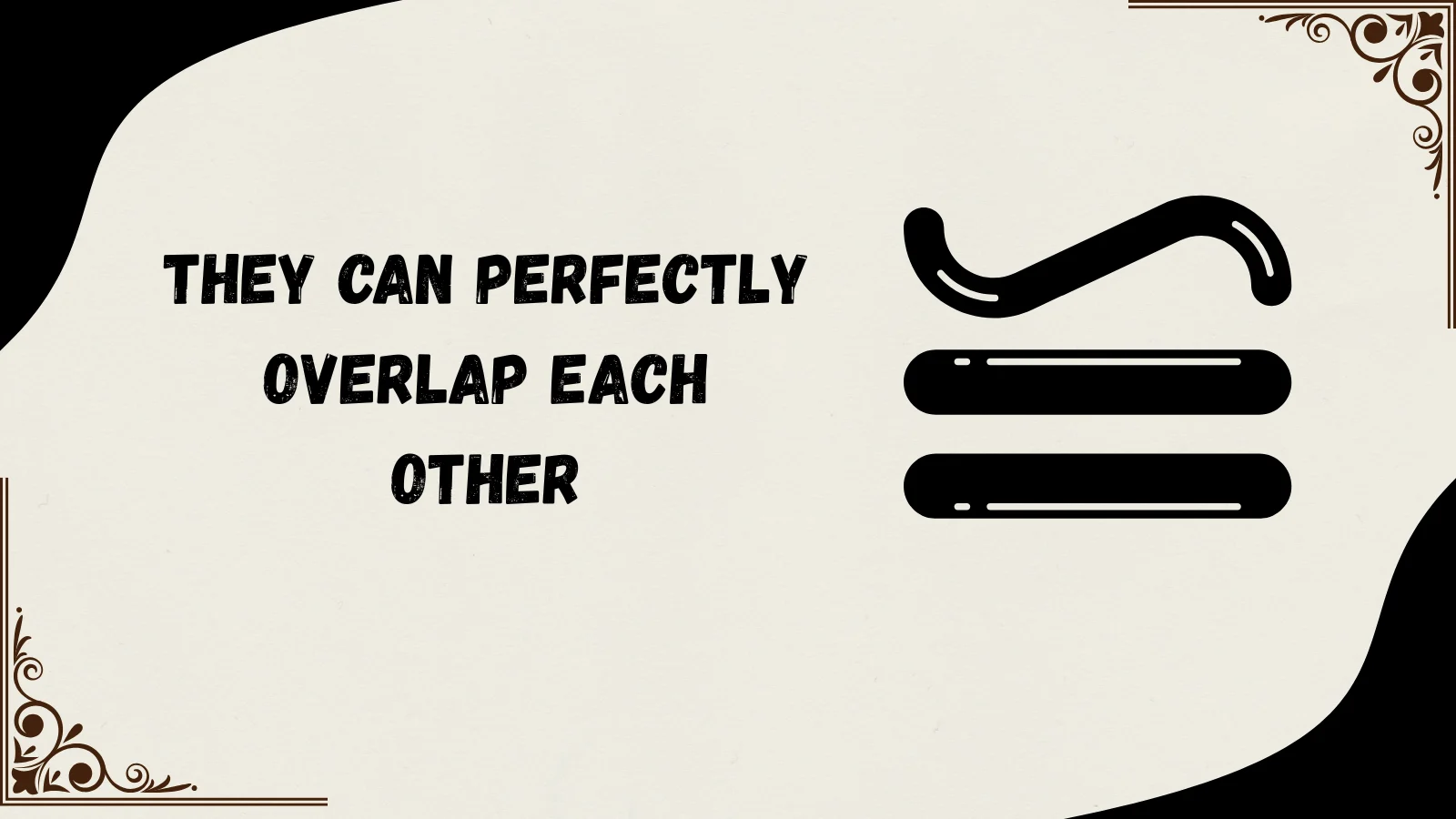
In mathematics, congruent means exactly the same in shape and size.
If two objects are congruent:
- They have the same dimensions
- They have the same angles
- They can perfectly overlap each other
In geometry, the word is most commonly used for:
- Triangles
- Line segments
- Angles
- Polygons
The symbol for congruence is:
≅
For example:
Triangle ABC ≅ Triangle DEF
This means both triangles are identical in shape and size — even if they are rotated or flipped.
Origin of the Word “Congruent”
The word “congruent” comes from the Latin word congruere, which means “to agree” or “to come together.”
In math, this idea of “agreement” means two figures match perfectly.
How to Use “Congruent” in Math Problems
Understanding congruent meaning in math is one thing — using it correctly is another. Let’s see how it works in different scenarios.
1. Congruent Line Segments
If two line segments have the same length, they are congruent.
Example:
- AB = 5 cm
- CD = 5 cm
We write:
AB ≅ CD
Even if they are in different positions, they’re still congruent if the length is the same.
2. Congruent Angles
If two angles measure the same, they are congruent.
Example:
- ∠A = 90°
- ∠B = 90°
Then:
∠A ≅ ∠B
3. Congruent Triangles
This is where things get more interesting.
Two triangles are congruent if:
- All corresponding sides are equal
- All corresponding angles are equal
There are special triangle congruence rules:
- SSS (Side-Side-Side)
- SAS (Side-Angle-Side)
- ASA (Angle-Side-Angle)
- AAS (Angle-Angle-Side)
- RHS (Right angle-Hypotenuse-Side)
If a triangle follows any of these rules with another triangle, they are congruent.
Examples of Congruent Figures in Real Life
To truly understand congruent meaning in math, let’s connect it to real-world examples.
Example 1: Identical Tiles
Imagine two floor tiles made in the same factory mold.
They are:
- Same size
- Same shape
- Same angles
These tiles are congruent.
Example 2: Printed Copies
If you print the same image twice without resizing, the two images are congruent.
Example 3: Playing Cards
All standard playing cards are congruent rectangles — same width and height.
Examples of “Congruent” in Math Conversations
Here’s how students typically use the word:
Student 1: “How do we know these triangles are the same?”
Student 2: “Because they follow SAS, so they’re congruent.”
Another example:
Teacher: “Why is angle A equal to angle D?”
Student: “Because they are corresponding angles in congruent triangles.”
Notice that the word “congruent” is often used in geometry proofs.
Congruent vs Equal: Common Confusion
Many students confuse equal and congruent.
Let’s clear that up.
Equal
- Usually refers to numbers.
- Example: 5 = 5
Congruent
- Refers to shapes or figures.
- Example: Triangle ABC ≅ Triangle DEF
Important difference:
- Two angles can be equal.
- Two shapes are congruent.
However, in geometry, equal angles are also called congruent angles.
Congruent vs Similar: Another Big Confusion
This is one of the most common mistakes students make.
Congruent Figures
- Same shape
- Same size
Similar Figures
- Same shape
- Different size
For example:
- A small triangle and a larger triangle with the same angles are similar.
- But they are not congruent because their sizes differ.
Congruence Rules for Triangles (Explained Simply)
Let’s simplify triangle congruence rules.
1. SSS (Side-Side-Side)
If:
- All three sides of one triangle equal the three sides of another triangle
Then: - The triangles are congruent.
2. SAS (Side-Angle-Side)
If:
- Two sides and the included angle are equal
Then: - The triangles are congruent.
3. ASA (Angle-Side-Angle)
If:
- Two angles and the included side are equal
Then: - The triangles are congruent.
4. RHS (Right angle-Hypotenuse-Side)
Only for right triangles.
If:
- Right angle is equal
- Hypotenuse is equal
- One side is equal
Then: - The triangles are congruent.
How to Identify Congruent Shapes in Exams
When solving exam questions, follow this checklist:
- Compare all sides.
- Compare all angles.
- Check orientation (rotation doesn’t matter).
- Apply triangle rules if needed.
- Use the ≅ symbol properly.
Pro tip: Draw matching marks on corresponding sides and angles. It makes proofs easier and cleaner.
Common Mistakes Students Make
Let’s talk about mistakes so you don’t repeat them.
Mistake 1: Thinking Rotation Changes Congruency
It doesn’t.
If you rotate or flip a shape, it can still be congruent.
Mistake 2: Confusing Similar With Congruent
Remember:
- Similar = Same shape
- Congruent = Same shape + Same size
Mistake 3: Wrong Order of Letters
If you write:
Triangle ABC ≅ Triangle DEF
Then:
- A corresponds to D
- B corresponds to E
- C corresponds to F
Wrong letter order can make your answer incorrect in exams.
Where “Congruent” Is Commonly Used
You’ll see congruent meaning in math in:
- School geometry books
- Board exams
- Competitive exams
- SAT-style tests
- Engineering basics
- Architecture drawings
- CAD software
In fact, engineers and architects rely heavily on congruent measurements when designing structures.
Why Understanding Congruent Is Important
Understanding congruency helps you:
- Solve geometry proofs
- Improve logical reasoning
- Master coordinate geometry
- Prepare for advanced math
- Understand symmetry in design
It builds strong mathematical thinking skills.
Related Math Terms You Should Know
If you’re learning about congruent meaning in math, also explore:
- Similar figures
- Parallel lines
- Corresponding angles
- Alternate interior angles
- Isosceles triangle
- Equilateral triangle
- Transformation (reflection, rotation, translation)
Internal linking suggestion:
You can link this article to related guides like:
- “Similar Figures Explained”
- “SSS vs SAS Rule in Geometry”
- “What Does Reflection Mean in Math?”
FAQs About Congruent Meaning in Math
1. What is congruent meaning in math in simple words?
It means two shapes are exactly the same in shape and size.
2. What symbol represents congruent?
The symbol is ≅.
3. Can shapes be congruent if flipped?
Yes. Rotation and flipping do not affect congruency.
4. Are congruent triangles always similar?
Yes. Congruent triangles are always similar, but similar triangles are not always congruent.
5. Can circles be congruent?
Yes. Two circles are congruent if they have the same radius.
6. Is equal the same as congruent?
Not exactly. Equal usually refers to numbers. Congruent refers to shapes.
7. How do I prove triangles are congruent?
Use SSS, SAS, ASA, AAS, or RHS rules.
8. Does position matter for congruent figures?
No. Position or orientation does not matter.
Final Thoughts
Understanding congruent meaning in math makes geometry easier and less confusing. It simply means two shapes are identical in shape and size no more, no less.
Once you understand the rules like SSS, SAS, and ASA, proving congruency becomes straightforward. Just remember: congruent figures can be rotated or flipped, but they must match perfectly.
Now that you fully understand congruency, try spotting congruent shapes around you — tiles, cards, book covers math is everywhere!