In the world of geometry and online learning, supplementary angles pop up more often than you think.
Whether you’re solving math problems, chatting in study groups, or trying to explain angles in a text, knowing what supplementary angles mean can save you confusion and maybe even impress your friends!
Updated for 2026, this guide will break down the meaning of supplementary angles in a way that’s easy to remember, relatable, and even a little fun.
We’ll explore examples, common mistakes, and how this term can pop up in your online chats or school discussions.
What Does “Supplementary Angles” Mean? (Definition & Origin)
So, what exactly are supplementary angles? Let’s keep it simple:
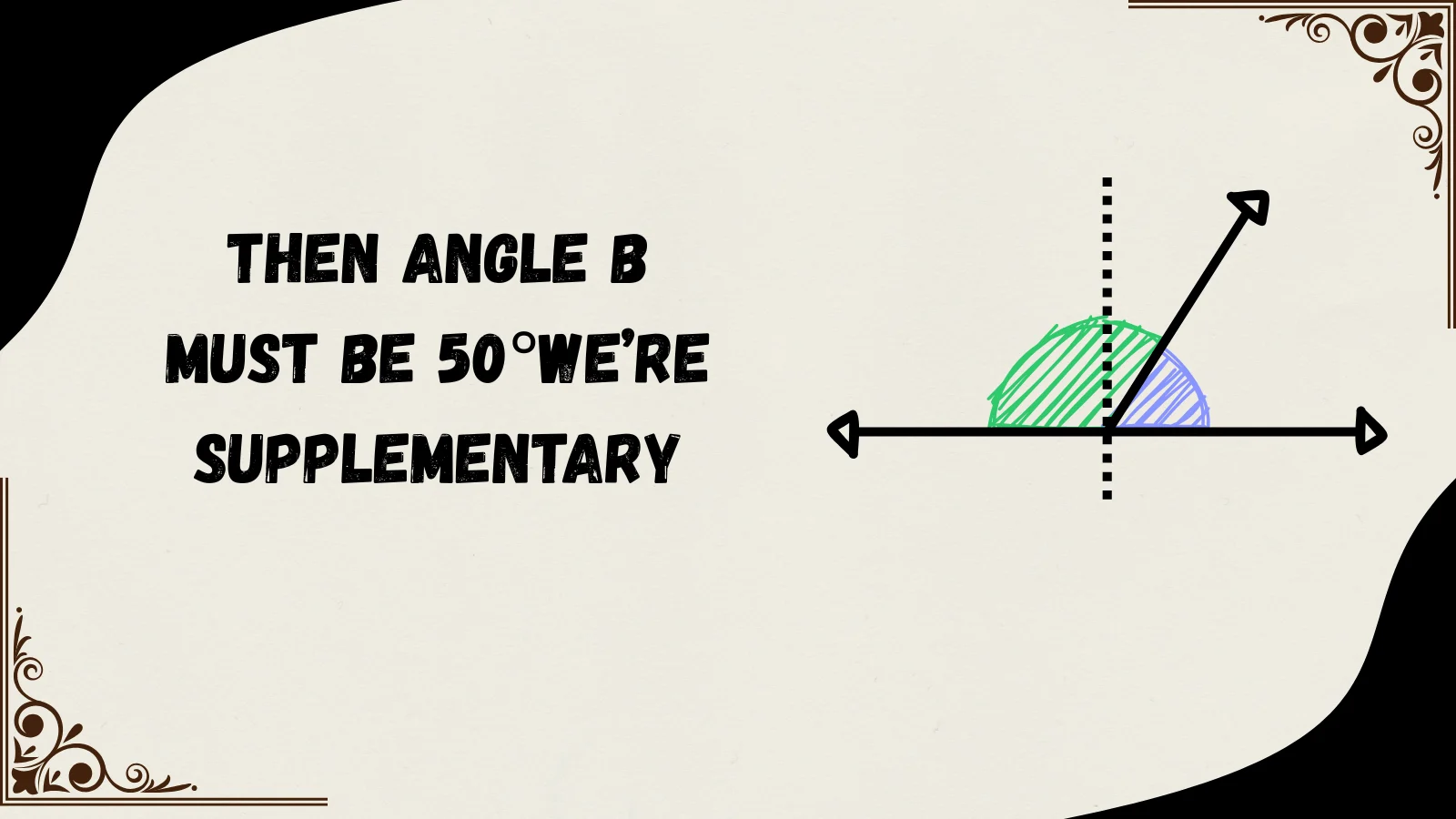
- Definition: Supplementary angles are two angles whose sum is exactly 180°.
- Origin: The term comes from Latin “supplere”, meaning “to complete.” Basically, two angles “complete” a straight line when added together.
Think of it like this: If you and a friend each take part of a pizza slice and together eat a whole half-circle, that’s a bit like supplementary angles—they add up to form a straight line!
Quick Example:
- 120° + 60° = 180° ✅
- 90° + 90° = 180° ✅
- 100° + 50° = 150° ❌ (Not supplementary)
How to Use “Supplementary Angles” in Texts or Chat
Believe it or not, geometry terms like this sometimes sneak into online conversations—especially among students, educators, or math enthusiasts. Here’s how people might casually use it:
- In group homework chats:
“Hey, your angle is 70°, mine is 110°—we’re supplementary angles lol 😎” - On social media memes:
“When your bestie complements your personality perfectly… #SupplementaryAngles” - In forums or study groups:
“I finally understand supplementary angles—180° isn’t scary anymore!”
Basically, anytime you’re talking about things that “fit together perfectly,” you can throw in a playful nod to supplementary angles. It’s both educational and relatable.
Examples of “Supplementary Angles” in Conversations
To make it extra clear, here are some fun scenarios:
- Study Group Chat:
Alice: “I have 130° for angle A.”
Bob: “Then angle B must be 50°we’re supplementary angles! 😂” - Math Meme Text:
“Me + coffee = Supplementary angles because together we make a perfect 180° morning 😅” - Classroom Discussion Online:
“Remember, any two angles that sum to 180° are supplementary. So 110° + 70° works!”
These examples show that supplementary angles aren’t just maththey can be part of relatable jokes, memes, and casual educational chats.
Common Mistakes or Misunderstandings
Even in 2026, people get tripped up by supplementary angles. Here’s what to watch out for:
- Confusing with complementary angles: Complementary angles sum to 90°, not 180°.
- Mixing up individual angles: Remember, it’s the sum that matters, not the size of each angle.
- Assuming all straight angles are equal: Not always! One could be 120° and the other 60°still supplementary.
Tip: Always check the sum. If it equals 180°, congratulationsyou’ve got supplementary angles.
Related Slangs or Abbreviations
While “supplementary angles” isn’t a texting abbreviation per se, it’s part of a broader trend of educational shorthand in chats. Related terms you might see include:
- Complementary angles – sum to 90°
- Reflex angle – more than 180°
- Acute angle – less than 90°
- Obtuse angle – more than 90° but less than 180°
And in fun texting slang, you might see:
- “Suppl angles” – shorthand for supplementary angles
- “180° duo” – playful way to describe a pair of angles that sum to 180°
Why Knowing Supplementary Angles Matters in 2026
- For students: Makes geometry and algebra easier to understand.
- For casual texting: Adds clever math references to your chats.
- For memes & online jokes: Perfect for nerdy humor, relatable in TikTok or Instagram posts.
It’s a simple concept but widely useful—both academically and socially.
FAQs About Supplementary Angles
- Q: Are supplementary angles always next to each other?
A: No, they don’t have to be adjacent; their sum just needs to be 180°. - Q: What is the difference between supplementary and complementary angles?
A: Supplementary = 180°, Complementary = 90°. - Q: Can an obtuse angle have a supplementary angle?
A: Yes! For example, 120° + 60° = 180°. - Q: Are straight angles considered supplementary?
A: A straight angle itself is 180°, so technically it’s already “complete” without another angle. - Q: Can supplementary angles be negative?
A: Typically, angles are measured positive, so negative angles aren’t usually used in this context. - Q: Is there a shortcut to find the supplementary angle?
A: Yes! Subtract the given angle from 180°. - Q: Do supplementary angles appear in real life?
A: Absolutely! Examples include straight roads, protractors, and pie slices. 🍕 - Q: Can supplementary angles be used in text jokes?
A: Totally! Think “we fit perfectly together like supplementary angles.” 😄
Conclusion
Understanding supplementary angles is more than just memorizing math definitions it’s about spotting patterns, making clever jokes, and even enhancing your study chats.
Remember: two angles add up to 180° = supplementary angles.
Next time you’re texting with friends or solving a geometry problem, you’ll know exactly how to use this term correctly.
Share your favorite text abbreviation or fun math joke in the comments you might just inspire someone to see angles in a whole new way!